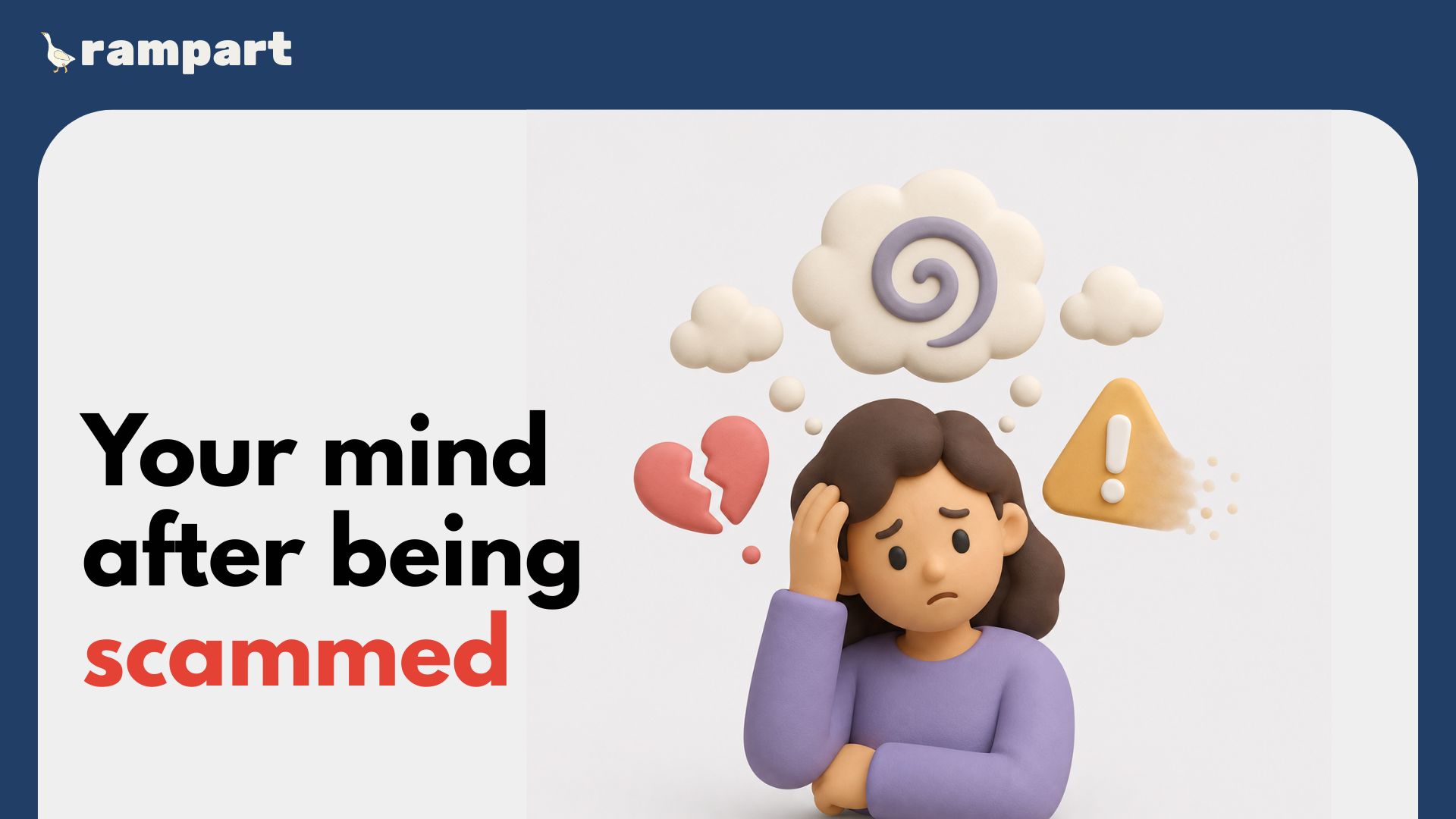
If you were scammed, your brain is probably trying to replay the moment over and over.
Why did I click? Why did I answer? Why did I send the code? Why did I not stop?
That loop feels useful, but it can trap you. The next useful step is not punishment. It is containment: secure the account, contact the bank or platform, save evidence, report the scam, and tell one person who will not make it worse.
What scammers try to create
Scammers are not only trying to get information. They are trying to create a state of mind.
| Feeling | How the scam uses it | What helps |
|---|---|---|
| Fear | "Your account will close today" | Slow down and use the official app |
| Hope | "You were selected" | Check the source outside the message |
| Shame | "Do not tell anyone" | Tell one safe person |
| Urgency | "You have 10 minutes" | Make the next step slower |
| Relief | "I can fix this for you" | Verify before accepting help |
Research on financial scams describes how emotions like fear and hope can shape how people engage with scams before, during, and after the event. That does not make the loss less serious. It means the scam was designed to work under pressure.
Why shame makes recovery harder
Shame tells you to hide. Scammers love that.
If you hide, you may delay the bank call, avoid changing passwords, skip reporting, or leave a family member exposed to the same scam. If the scammer still has access to a phone, email, social account, or payment method, silence helps them.
Use this sentence:
"I think I got scammed. I need help securing things, not a lecture."
That is enough.
What to do in the first hour
- Stop talking to the scammer.
- Call the bank, card issuer, platform, or phone carrier from an official number.
- Change the password for the affected account.
- Change the same password anywhere else you reused it.
- Revoke unknown devices or sessions.
- Save screenshots, phone numbers, emails, payment receipts, and links.
- Report the scam.
The FTC says that if you paid a scammer, it is still worth contacting the company you used to send money and asking whether reversal or recovery is possible.
If you clicked a bank text
Go straight to the recovery guide:
/us/blog/what-to-do-after-clicking-fake-bank-text/
If you are still deciding whether a bank text is real:
/us/blog/online-banking-activity-alert-text-scam/
The hard part is not only spotting bad spelling. It is spotting the mismatch while your body is already reacting.
Sources
- FTC, what to do if you were scammed: https://consumer.ftc.gov/articles/what-do-if-you-were-scammed
- Research on emotions and help needs during financial scams: https://arxiv.org/abs/2604.06218
- TIME, what to do if you have been scammed: https://time.com/6957565/scam-what-to-do/